
IIT Delhi

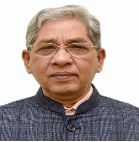
Dr. Mukesh Khare is a Professor Emeritus of Environmental Engineering in the Department of Civil Engineering at IIT Delhi. He is the Fellow of Institution of Engineers India and Fellow of Wessex Institute of Great Britain. He is a Chartered Engineer. He obtained his Ph.D. degree in the Faculty of Engineering from Newcastle University, UK and has managed a range of Environmental projects throughout his professional career.
With a specialization in air quality modelling, Prof. Khare’s experience has covered research and development studies, teaching, consulting, modelling, and editorial activities. In addition, Prof. Khare has authored more than 200 research publications, primarily for peer-reviewed journals and conference proceedings. Besides this, Prof. Khare has authored more than 5 books and contributed several chapters for various publishing houses in urban air quality monitoring, modelling and management. Prof. Khare has been serving as a member in High Level Task Force (HLTF) at Prime Minister Office. Prof. Khare has also been working as Member, Environmental Appraisal Committees (Infrastructure-I and Non-Coal Mining), Ministry of Environment and Forests and Climate Change, Government of India. Prof. Khare has also been in various Public Sector
Undertakings as Director in their respective Boards of Director.
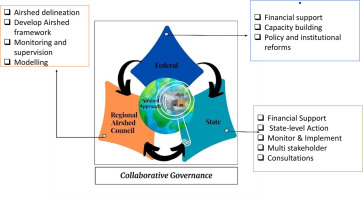
Air pollution in India transcends administrative boundaries, rendering city-centric action plans under the National Clean Air Programme (NCAP) insufficient to achieve sustainable improvements in air quality. Recent scientific advances demonstrate that pollutant transport, meteorology, and topography define interconnected regional airsheds—spanning clusters of urban, semi-urban, and rural areas—requiring coordinated management. This talk outlines a policy-scientific framework for institutionalizing airshed-based regulation as the next evolution in India’s clean air governance. Using multi-year satellite PM2.5 data, meteorological clustering, and chemical transport modelling, recent studies identify regional airsheds across India, with secondary PM2.5 and transboundary transport contributing more than 50% of total particulate load in several zones. Examples from the Indo-Gangetic Plain highlight the limitations of local interventions when regional sources such as biomass burning or industrial plumes dominate. The talk proposes a regulatory transition from municipal to airshed-level planning, integrating emission inventories, source–receptor modelling, and hybrid monitoring networks combining regulatory and low-cost sensors. Such a framework aligns scientific
evidence with institutional mechanisms to enable joint accountability, cost-effective mitigation, and measurable health benefits—positioning
airshed-based management as the new frontier of India’s air quality policy.
© 2026 11th INDIAN INTERNATIONAL CONFERENCE ON AIR QUALITY MANAGEMENT
