Indian International Conference
on Air Quality Management
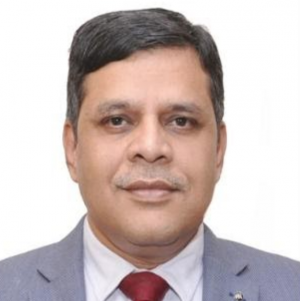
Dr. Ajay Deshpande
IIT Bombay
About the Speaker
Prof. Ajay Deshpande
Dr. Ajay Deshpande is a seasoned environmental governance and sustainability expert more than 30 years of experience in environmental compliance and governance. Holding a Doctorate in Environmental Engineering from IIT Delhi and a Bachelor of Laws (LLB) from Mumbai University, he specializes in pollution control, environmental governance and policy, climate change mitigation, environmental, social and governance (ESG), circular economy, and environmental safeguards. He has held key positions, including as Expert Member at India’s National Green Tribunal (NGT) (2013-2017) and Compliance Review Panel Member at the Asian Development Bank (ADB) (2017-2022). He has been an environmental regulator at Maharashtra Pollution Control Board (1997-2012).
Ajay has played a pivotal role in shaping environmental policies, including contributions to India’s environmental improvement action plans, Circular Economy Action Plan and Resource Efficiency initiatives. He is presently Member of Inspection Panel at The World Bank and also, an Adjunct Professor at IIT Bombay where he continues to teach environmental policy and sustainability while driving research and thought leadership in environmental governance, climate action and circular economy.
ENVIRONMENTAL AND SOCIAL ACCOUNTABILITY IN DEVELOPMENT FINANCE
Air Pollution Management in India is facing a unique challenge of urgent intervention and achieving desired results in terms of compliance of ambient air quality standards. Such management in India is planned through city specific air quality improvement action plans. However, it is increasingly evident that such decentralised approach may not be able to achieve overall objective and hence area based, like state or airshed based air quality action plans are being proposed. Such action plans need to have technology improvement, social aspects and health aspects integrated to obtain holistic results. Such large projects require significant finances which generally is obtained through Development Financial institutions like ADB, World Bank etc., which are significant knowledge resources besides experience of working ins several parts of the world.
However, such project financing involves critical environmental and social safeguards evaluation by these banks using their own E& S safeguards framework. Such funding also provide opportunity for the residents to use the Accountability mechanism in these Banks in case they feel that the Bank has not complied to its own policies and procedures., The proposed talk aims to introduce the concept of Safeguards and Accountability at these development finance institutes.