
Delft University of Technology


Dr. Ajit Ahlawat is an Assistant Professor in the Department of Geoscience and Remote Sensing at Delft University of Technology (TU Delft),
The Netherlands. His research focuses on measuring and characterizing urban air pollution using advanced aerosol instrumentation. He specializes
in assessing particle size, hygroscopicity and chemical composition, providing critical insights into the physical and chemical behavior of
atmospheric aerosols in urban environments. His recent work also employs deposition and health impact models to investigate the influence of
urban haze on human respiratory exposure and overall health risks. Dr. Ahlawat also uses new techniques, including drones, low-cost sensor
networks and machine learning, to study the dynamics of air pollution and unravel the hidden mechanisms driving haze formation. He earned his
PhD in atmospheric aerosol instrumentation from the CSIR–National Physical Laboratory in Delhi, India, and subsequently conducted six years of
postdoctoral research at the Leibniz Institute for Tropospheric Research (TROPOS) in Leipzig, Germany. During this period, he made significant
contributions to ground-based and airborne observational campaigns, advancing global capabilities in air quality monitoring. At TU Delft, Dr.
Ahlawat continues to bridge the gap between atmospheric science and technological innovation, enhancing our understanding of urban air quality
and its implications for the environment and public health.
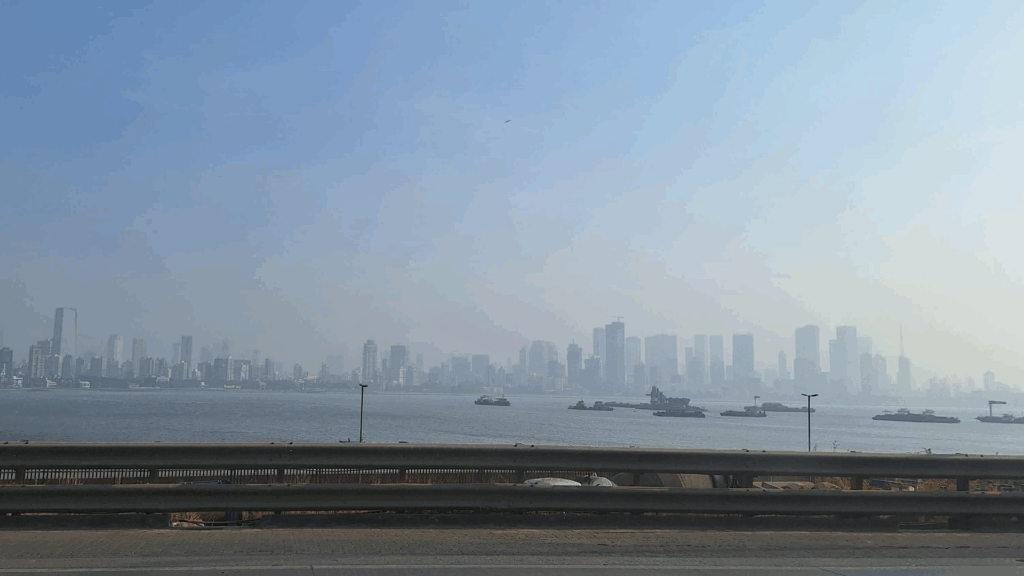
Urban haze is a defining feature of rapidly developing cities, arising from the complex interplay between fine particulate matter (PM) and
atmospheric chemistry. In Delhi, India, we investigated how haze evolves throughout the day as secondary organic aerosols (SOAs) form through the oxidation of volatile organic compounds (VOCs), transitioning from less- to more-oxidized states and coagulating with fresh emissions to thicken the aerosol burden. During night-time and the early morning, we observed that secondary inorganic aerosols (SIAs), mainly consisting of particulate chloride, intensify haze formation. In order to link these processes to human exposure and health impacts, we use a lung deposition model that incorporates measurements of particle size, density, chemical composition, and hygroscopicity to estimate the deposition in lung tissue.
This new metric connects ambient particle properties to physiological impact. We observe distinct deposition patterns during different periods: biomass burning; chloride-rich; hydrocarbon-dominated; and relatively clean. Our findings demonstrate that the mass of particles delivered to lung tissue is a more direct and biologically relevant measure of the health risks posed by urban haze, in addition to the already established method of assessing the oxidative potential and cytotoxicity of aerosol particles.
© 2026 11th INDIAN INTERNATIONAL CONFERENCE ON AIR QUALITY MANAGEMENT
