Indian International Conference
on Air Quality Management
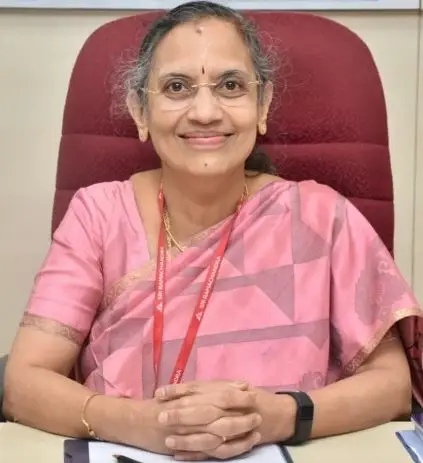
Prof. Kalpana Balakrishnan
Sri Ramachandra Institute of Higher Education and Research
About the Speaker
Prof. Kalpana Balakrishnan
Kalpana Balakrishnan is a senior global environmental health researcher with nearly 30 years of experience in leading large scale field epidemiological studies in India. Her primary research involvement has been in the area of health effects of household and ambient air pollution and chemical risk assessment. She has designed and conducted multiple cohort studies and has also been involved with multi-country randomized control trials, to strengthen the evidence for efficacy of air pollution interventions on birth/early childhood and adult cardio-vascular outcomes. She is globally acclaimed for her contributions on developing novel exposure assessment approaches to characterize the complex multi-media exposures experienced by rural and urban populations in low and middle income countries
She is currently engaged in research and training collaborations with a network of more than 50 national and international institutional partners to address national and global health research priorities. She is a distinguished fellow of the National Academy of Medical Sciences in India.
Abstract
BUILDING THE EVIDENCE FOR EQUITABLE AND SEAMLESS HEALTHY BREATHY SPACES IN INDIA
Air pollution ranks among the leading risk factors contributing to the disease burden in India with roughly equal contributions from ambient air pollution (AAP) and household air pollution (HAP). The dual burden from AAP and HAP exposures that straddles across rural and urban populations poses an enormous challenge for air quality management.
Over the last three decades, the team of researchers from SRIHER have systematically contributed to strengthening the pool of evidence on health effects of air pollution through multiple strategic exposure assessment and epidemiological studies across multiple states. These studies have collectively provided seminal contributions for (i) state and national level exposure models (ii) exposure-response relationships for acute and chronic health effects (iii) biomonitoring protocols for health and exposure surveillance and (iv) assessment of efficacy and cost-effectiveness of interventions.
The talk will summarize the key research contributions of the SRIHER team and on-going initiatives that provide unique opportunities to prioritize air quality actions and create “equitable seamless breathing spaces” in India.