
Management of multi-media pollution to protect human health and the environment requires the establishment of standards. A variety of standards exist that include emission (mass based) standards for stationary and mobile sources. The implementation of these emission standards still results in residual concentrations in air and potentially other environmental media. Adverse health effects from such residual concentrations depend on the amount of exposure to a chemical and the inherent toxicity of the chemical. Exposure can occur by ingestion of contaminated media (soil, water, fish. vegetables, etc.), inhalation (ambient air or indoor air) or dermal contact (soil or water). Under the USEPA’s decision making models, adverse health effects are broadly divided into carcinogenic and non-carcinogenic effects. Chemical specific quantitative toxicity factors are typically developed based on animal experiments and the extrapolation of such results to humans using a variety of assumptions and structure activity relationships and supported by epidemiological studies, as appropriate. This paper will present the science and policies required to develop risk-based standards for various environmental media.

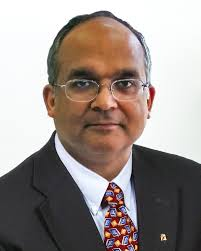
Dr. Salhotra brings nearly 40 years of expertise in developing policies and procedures for managing multi-media contamination, with extensive experience supervising more than 200 risk assessments across state and federal programs involving hydrocarbons, VOCs, solvents, and metals. He has served as an expert witness in complex environmental cases in the US, Israel, and the United Kingdom. As one of only nine certified instructors for ASTM’s Risk-Based Corrective Action (RBCA) standard, he has led the development and implementation of RBCA programs for 15 US states, the U.S. Air Force in Europe, and the Israel Ministry of Environment. Having trained over 8,000 professionals through courses conducted in 25+ states and 10 countries, he is widely recognized for his global impact in environmental risk management. Dr. Salhotra holds degrees from MIT (Ph.D.), AIT Thailand (M.Eng.), and IIT Delhi (B.Tech.) and is currently based in Houston, Texas.
© 2026 11th INDIAN INTERNATIONAL CONFERENCE ON AIR QUALITY MANAGEMENT
