
Air pollution constitutes the introduction of harmful natural or synthetic materials into the atmosphere, driven by a complex interplay of anthropogenic activities—such as vehicular exhaust and industrial emissions—and natural phenomena like volcanic eruptions . This presentation delineates the fundamental classification of pollutants into primary categories, including carbon monoxide, nitrogen oxides, and particulate matter, and secondary formations like photochemical smog and ozone, which arise from atmospheric chemical reactions . Central to understanding urban air quality is the physics of contaminant transport, where advection by mean wind flow and turbulent diffusion facilitate the dispersion of pollutants across scales ranging from molecular to global . The analysis distinguishes between Eulerian frames of reference, which observe flow at fixed locations, and Lagrangian frameworks that track specific fluid parcels, offering complementary perspectives on dispersion . Furthermore, the text examines the comprehensive lifecycle of pollutants, from emission sources and atmospheric scavenging mechanisms like rainout to their ultimate deposition and severe detrimental impacts on human respiratory health, vegetation, and infrastructure materials .

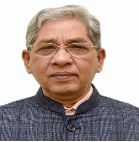
Dr. Mukesh Khare is a Professor Emeritus of Environmental Engineering at IIT Delhi, a Fellow of the Institution of Engineers (India) and the Wessex Institute of Great Britain, and a Chartered Engineer. He earned his Ph.D. from Newcastle University, UK, and has led numerous environmental and air quality–related projects across his career. With deep expertise in air quality modelling, he has significantly contributed to research, teaching, consulting, and editorial work, and has authored over 200 publications along with several books and book chapters in the field of urban air quality management. He has also served in key national committees and governance roles contributing to India’s environmental policy and public sector leadership.
© 2026 11th INDIAN INTERNATIONAL CONFERENCE ON AIR QUALITY MANAGEMENT
