Indian International Conference
on Air Quality Management
Joseph V. Puthussery
IIT Delhi
About the Speaker
Joseph V. Puthussery
Dr. Joseph V. Puthussery is an Assistant Professor at IIT Delhi working at the intersection of air pollution, aerosol instrumentation, and human exposure science. His research group develops real-time aerosol and bioaerosol sampling systems, measures particulate matter toxicity and oxidative potential, and evaluates exposure pathways relevant to public health. The group combines chemical characterization, acellular and cellular assays, and field deployments to better quantify the health-relevant properties of PM₂.₅. Their work also integrates source apportionment to identify pollution sources that contribute most to toxicity, supporting more targeted and effective air quality management strategies.
OXIDATIVE POTENTIAL OF PM₂.₅: A HEALTH-RELEVANT METRIC FOR AIR QUALITY MANAGEMENT IN INDIA
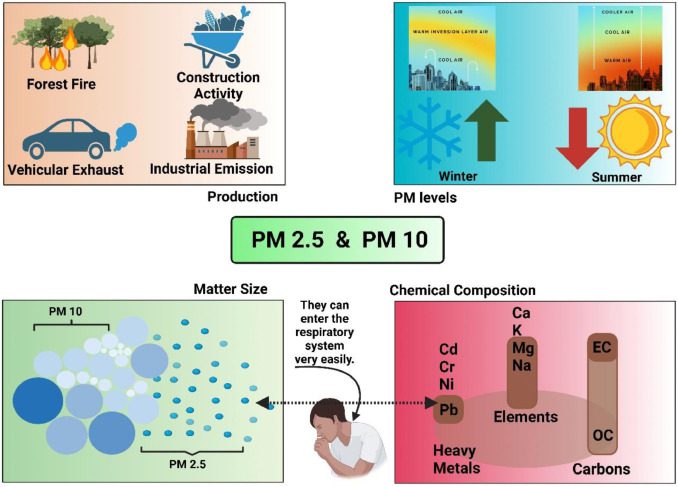
Particulate matter (PM₂.₅) mass concentration remains the primary metric guiding air quality management in India, yet it does not adequately capture the health-relevant property of airborne particles. Growing evidence shows that the chemical composition and oxidative potential (OP) of PM₂.₅ are stronger predictors of adverse biological responses than mass alone.
In this talk, I will present recent advancements in measuring aerosol OP using acellular assays, real-time sampling systems, and integrated chemical–toxicological analysis. I will also combine PM₂.₅ OP datasets collected from Delhi and Illinois, USA, to compare their OP across two contrasting environments. These measurements show how traffic emissions, biomass burning, and secondary aerosol formation contribute disproportionately to toxicity despite similar mass loadings.
Linking OP with source apportionment further identifies the sources that drive the greatest health risks. By moving beyond mass-based indicators, this work highlights the value of OP as a more informative and health-relevant metric for air quality management.