
IIT Delhi


Prof. Arvind Nema obtained Ph.D. in Environmental Science & Engineering from IIT Bombay in 1997 and is an elected Fellow of the Indian National Academy of Engineers (INAE) w.e.f. November 2025. He has been working with IIT Delhi since September 2002. His main research focuses on the analysis of environmental systems, environmental impact and risk assessment. Dr Nema has contributed as expert member in Central Pollution Control Board’s steering committee for Environmental Action Plan for Critically polluted Areas; Technical committee for utilization of hazardous waste as a supplementary resource or for energy recovery; and Remediation of Hazardous Waste Contaminated Dump Sites; and Expert Member for the State Environmental Appraisal Committee for evaluating Proposals. He had been Vice-Chairman GATE from 2012 to 2014, Chairman GATE in 2015, Vice-Chairman JEE (Advanced) in 2016, Chairman JEE (Advanced) in 2017, Associate Dean (Hostel Management) from 2018 to 2020, Dean (Student Affairs) from 2020 to 2022, Head, Department of Civil Engineering from 2022 to 2024 and Provost/ Deputy Executive Director at IIT Delhi – Abu Dhabi from January 2024 – December 2024. He has been a member (senate nominee) of the Board of Governors at IIT Delhi since January 2024. Prof Nema has been working as the Deputy Director (Operations), IIT Delhi, since July 2025.
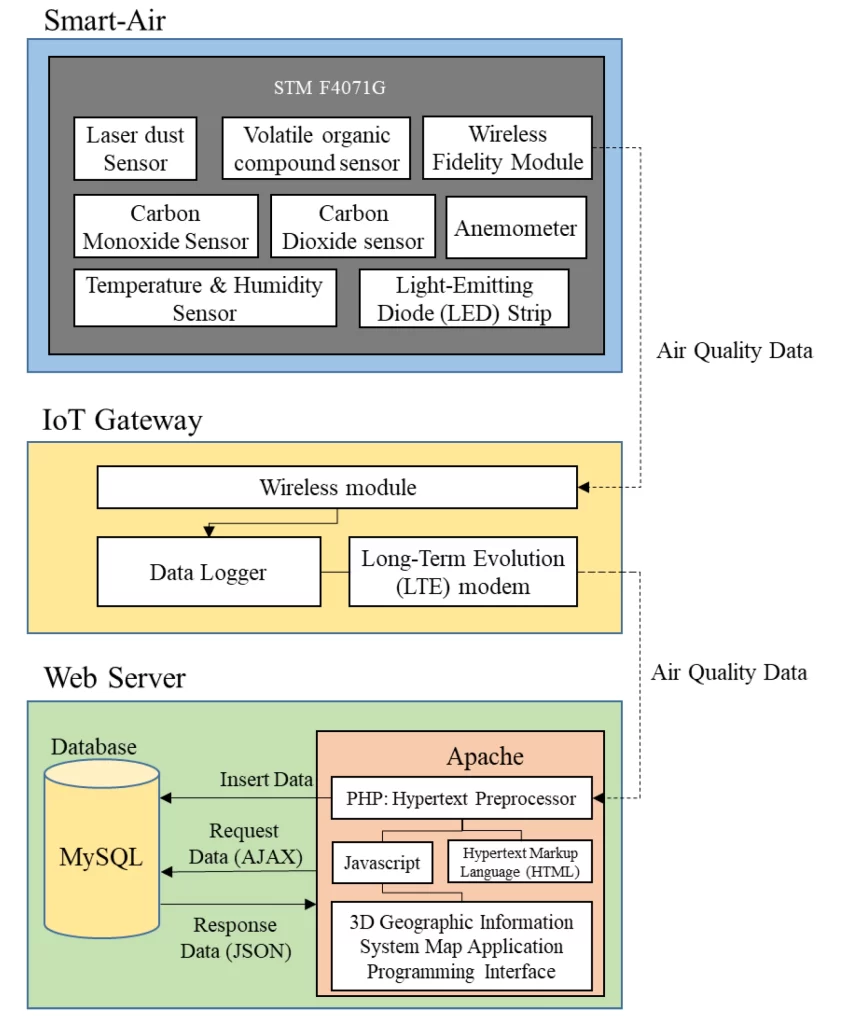
India has some of the world’s worst air pollution. Scientific studies show that about two-third of the 100 most polluted cities globally are in India, and every year air pollution causes millions of early deaths (Lancet Planetary Health, 2022). Every winter, fine particles (PM2.5) and harmful gaseous pollutants affect human health. Present approach is, we only act after the air quality parameters already go beyond limits. There is a need for an effective early warning system that continuously measures air quality across cities and villages and uses proven models to predict when pollution will become harmful a few days in advance. Alerts and protective actions like reducing traffic, construction activities and/or industrial emissions should start before people start getting affected due to poor air quality. Early Warning Systems need to be adopted and implemented as an essential public-health tool, like a weather forecast that saves lives by warning us against extreme weather conditions. Challenges, include data gaps and enforcement, demand partnerships and ownerships. Benefits extend to public health, economic resilience, and climate synergy with net-zero goals. Key design principles include hybrid sensor fusion with satellite data, machine learning-driven forecasting for pollutant spikes, source identification, and real-time decision support in the critical air shades.
© 2026 11th INDIAN INTERNATIONAL CONFERENCE ON AIR QUALITY MANAGEMENT
