Indian International Conference
on Air Quality Management
Harish C. Phuleria
IIT Bombay
About the Speaker
Harish C. Phuleria
Dr. Harish C. Phuleria is an Associate professor in Environmental Science and Engineering Department at IIT Bombay having about 20 years of experience on environmental monitoring, aerosols chemistry, exposure assessment and environmental health. His research group focuses on understanding the emissions from vehicular and biomass emissions sources, monitoring and modelling the long-term air pollution exposures, quantifying particle toxicity and examining the effect of air pollution on children and adults’ health. He holds a bachelor’s and master’s degree in Chemistry from Delhi University and IIT Delhi, master’s degree in Environmental Science and Engineering from IIT Bombay and a PhD degree in Environmental Engineering from University of Southern California, Los Angeles, USA.
Assessing the impact of stubble burning on regional air quality in
North India: Chemical characterization and source apportionment
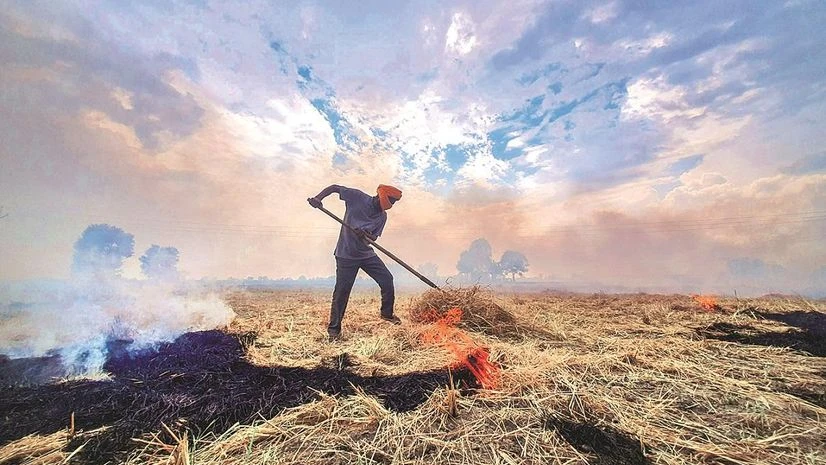
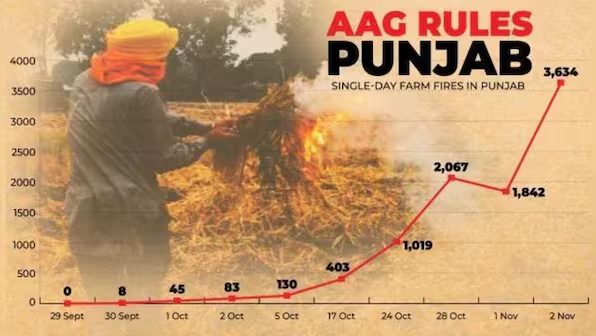
Over the past decade, stubble burning has emerged as one of the major polluting activities in India, in particular in Indo-Gangetic Plains. It is one of the major sources of brown carbon (BrC), the light-absorbing organic carbon component of fine particles. A large number of studies on the impact of stubble burning in India are based on source locations or urban areas; very little is known about its impact on a regional air quality. As part of the NCAP-COALESCEstudy, we examine the effect of stubble burning on regional air quality and co-occurring meteorological factors. Year-long PM 2.5 levels and light absorption by carbonaceous aerosols at 880 nm and 370 nm were measured at Rohtak, a regional background location in Northern India. Results reveal that post-harvest biomass burning in the Punjab-Haryana region affects the regional air quality with a lead of one to two days. A comparison of dispersion-normalized concentrations showed that open-field biomass burning not only affects regional air quality in the post-monsoon season (kharif crops) but is also a dominant source of PM 2.5 in the post-harvest summer season (rabi crop). PM 2.5 and aerosol light absorption are influenced more strongly by post-harvest burning of rabi crops during summer, while adverse meteorology plays a more dominant role in the post-monsoon season. The talk will further examine the chemical characteristics of PM during stubble burning, long-range dust, and festive firework episodes and their potential implications. Source apportionment of the aerosols including the need for better policy interventions to improve air quality in IGP region will also be discussed.