
CSIR-NEERI


Dr. K. V. George, born in 1967 in Kerala, is a distinguished Environmental Engineer with 33 years of experience. He holds a B.E. in Civil Engineering and an M.E. in Environmental Engineering from Government Engineering College, Jabalpur, and a Ph.D. from IIT Delhi. Currently serving as Chief Scientist and Head of the Air Pollution Control Division at CSIR-NEERI, Nagpur, Dr. George has led significant projects, including post-MIC gas accident studies at Union Carbide, EIA studies for major industries, and air quality modeling for industrial clusters and urban areas. A member of the Indian Antarctica Expedition in 2000, he has contributed to source apportionment studies in India and Qatar, the NCAP, AI/ML-based vehicular emission tools, and CAAQMS data analysis to inform pollution control strategies in coal-based power plants.
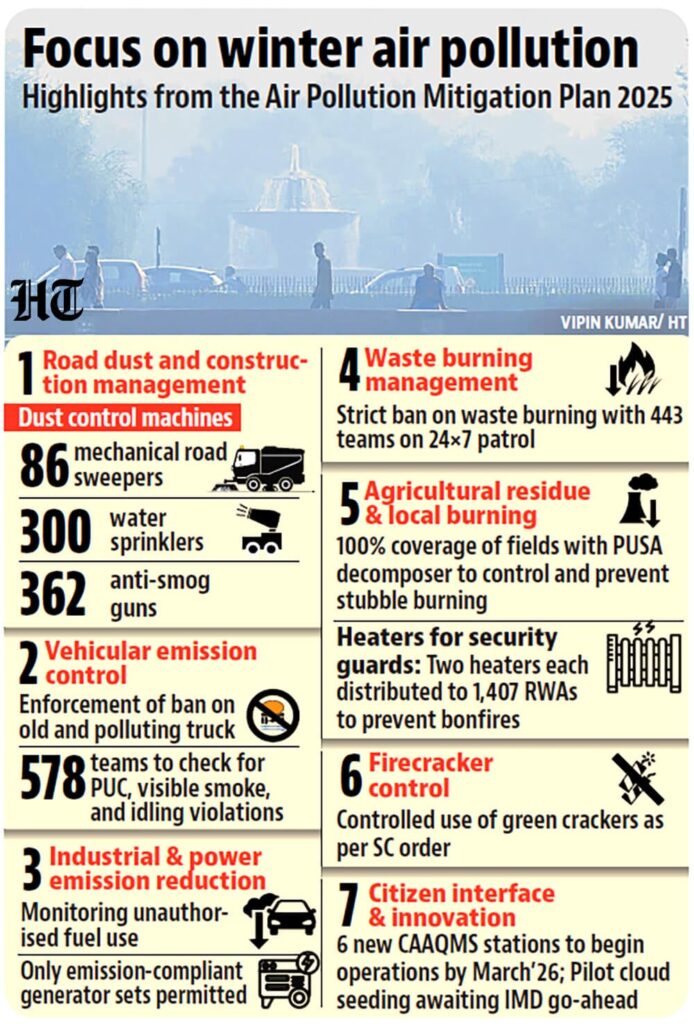
Every year during November to January, the concern for human health due to poor air quality of National Capital Region, Delhi becomes an agenda of discourse in social media and among alert citizens. However, it takes back seat once winter fades out and summer sets in. There were different hypothesis doing round in the discussion including, change of groundwater extraction policy for agriculture during summer months leading to shift of sowing and reaping followed by stubble burning due to time shortage, impact of northerly cold moist Siberian winds, swelling of secondary particulate matter etc. leading increased pollution, poor visibility in the Indo-Gangetic plain. Response to poor air quality is by way of graded response action plan (GRAP), odd-even vehicle policy, anti-smog tower etc. During these discourse, the reduced atmospheric mixing height and ventilation also find its place in academic circle in qualitative terms, however, its quantification did not appear as an evidence of correlating with high pollution episodes. WRF generated hourly mixing height, wind speed and ventilation is used for exploring the trends of these variables. Diurnal and daily maximum mixing height for each month analysed and it is found that winter time mixing height is mere 1000 m compared to 2500 m during summer. The overall maximum mixing height during winter is 20% of the summer mixing height. Due to very low wind speed during winter, the atmospheric ventilation also falls below 5000 m 2 /s, compared to more than 15000 m 2 /s during summer. Overall, the winter ventilation is 10% of summer ventilation. Such a sharp dip in ventilation between summer and winter without change in air pollution load particularly from vehicular emission leads to elevation of pollution levels. Under the business-as-usual scenario, the vehicular traffic vi-s-a-vis. the emission is expected to increase unless there is a drastic change in fuel and engine technology leading to very low emission or electric vehicle is introduced to a significant extent. Since the meteorology is not expected to change, in the wake of such a drastic policy level intervention, NCR, Delhi will continue to face once in a year, very high pollution levels.
© 2026 11th INDIAN INTERNATIONAL CONFERENCE ON AIR QUALITY MANAGEMENT
