
Poor air quality is the result of multiple emissions that are released into a stable atmosphere. In the real environment, there are very many different emission sources. All emitted pollutants mix with each other and we observe and measure a superposition of pollutants of very different origin. This includes their chemical composition as well as the location of their release. An important task for (urban) air quality management is the identification of all these local and remote emission sources.
Important tools for this purpose are the receptor models that attempt to disentangle the contributions of different emission sources, especially in complex situations: multiple sources emitting at different locations, at different distances and in different combinations of pollutants at different times of the day. The lecture introduces the receptor concept and explains three commonly used types of receptor models: Chemical Mass Balance model, Principal Components Analysis, and Conditional Probability Functions. The latter can be combined with polar plots and regression approaches. This lecture finally demonstrates some applications of such modelling techniques.

Poor air quality is caused by high emissions into an atmosphere with poor dispersion conditions. The latter are determined by the meteorological situation, which will be discussed in this lecture. The vertical structure of the atmosphere and the formation of inversion layers are important factors. They depend on atmospheric circulation at global, regional and local levels and can reflect the characteristics of the ground.
In the first part, we explain the formation of the subtropical jet stream and its influence on regional air quality in northern India. Since the jet stream, which flows near the tropopause, controls the formation of high- and low-pressure areas and can create subsidence inversion layers, it can affect the ground-level air quality. Secondly, air pollutants in urban regions can accumulate within a complex 3D system of internal boundary layers that are formed according to the urban structure. These layers comprise the Urban Canopy Layer, Roughness Sub-Layer, Inertial Sub-Layer, and Urban Boundary Layer. While only emissions can be actively reduced by society, knowledge of the meteorological conditions that promote the accumulation of pollutants is useful for reducing peak pollution levels.
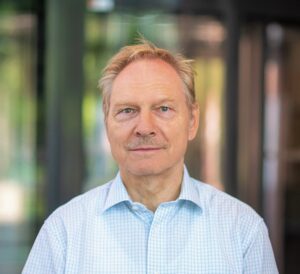
As well as working at the Department of Urban and Environmental Sociology of the Helmholtz Centre for Environmental Research (UFZ) in Leipzig, Germany, Uwe Schlink is Professor at the University of Leipzig, Institute of Meteorology. His research topics are “Urban climate and personal exposure”, which includes adaptation strategies to climate change, urban air quality, environmental health effects, and vulnerability with extreme environmental situations in urban areas.
He has published more than 100 articles in peer-reviewed international journals. Uwe is an adjunct faculty at the Dept. of Civil Engineering of the Indian Institute of Technology Madras in Chennai and a fellow of the Institute of Advanced Studies at Durham University, United Kingdom.
© 2026 11th INDIAN INTERNATIONAL CONFERENCE ON AIR QUALITY MANAGEMENT
