
Managing urban air quality requires understanding not only what is emitted, but how pollutants transform, travel, and accumulate across complex city environments. This lecture introduces participants to the scientific foundations and practical applications of air quality modelling, with a focus on urban India’s most challenging pollution contexts. The session will walk through the principles of emission inventory development, meteorological modelling, chemical transport modelling (WRF-Chem, CMAQ), and local scale dispersion modelling (AERMOD), as well as recent advances in data-driven forecasting and machine learning. Drawing on case studies from Delhi and multiple non-attainment cities, the talk demonstrates how models can be used to: (i) diagnose pollution sources and evaluate their contributions; (ii) assess impacts of episodic events such as stubble burning and dust storms; (iii) test feasible control interventions; (iv) estimate health risks; and (v) support city-level policy design such as Clean Air Action Plans. Participants will also be exposed to hands-on insights from developing India-specific emission inventories, integrating satellite observations, and building hybrid physical–ML forecasting systems.
By the end of the session, attendees will gain a clear understanding of how multi-scale modelling frameworks—when combined with observations and decision-support tools—can meaningfully improve air quality governance and help shape cleaner, healthier cities

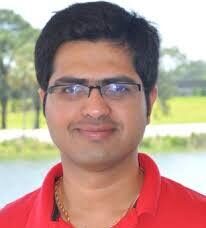
Dr. Sri Harsha Kota is currently an Associate Professor in Department of Civil Engineering and Chair Professor at Center for Excellence in Research in Clean Air (CERCA) at Indian Institute of Technology Delhi. Earlier, he was working as an Assistant Professor at Department of Civil Engineering at Indian Institute of Technology Guwahati. He is a recipient of Indian National Academy of Engineering (INAE)’s Young Engineer Award for the year 2021.He has more than fifteen years of research experience in the field of air quality management. He received his Master’s and PhD degrees in Civil Engineering with emphasis on air quality from Texas A&M University, USA. His main areas of interests are in regional/urban air quality modeling, estimating emission factors from different sources, developing air purifiers, air quality management, associating air pollution and human health, indoor air pollution and source apportionment of air pollutants. He is actively engaged in research collaborations with scientists in India, US, Europe and China. He has authored more than forty journal publications and is currently involved in multiple funded research projects.
© 2026 11th INDIAN INTERNATIONAL CONFERENCE ON AIR QUALITY MANAGEMENT
