
ICIMOD, Nepal


Dr Parth Sarathi Mahapatra is an accomplished environmental scientist and air quality expert with 15 years of experience in multidisciplinary environmental research, policy advising, knowledge management and programme implementation across South and South-East Asia. He holds the role of Intervention Manager – Air Pollution Mitigation at the International Centre for Integrated Mountain Development (ICIMOD). He serves as the Lead Author for the International Panel for Climate Change (IPCC’s) Seventh Assessment Report (AR7).
Parth, who is an Indian citizen holds a PhD in Science and specialises in air quality management, super pollutants, health impacts, climate co-benefits, circular economy and climate financing.
Parth has worked with government, private, intergovernmental, and developmental organisations, including Deutsche Gesellschaft für Internationale Zusammenarbeit (GIZ), ICIMOD, Council of Scientific and Industrial Research- Institute of Minerals and Materials Technology (CSIR-IMMT), J.M. Environet Private Limited where he has led impactful projects on air quality management, health and policy research, urban air pollution reduction/climate mitigation (targeting multiple sectors), stakeholder capacity building, and international collaborations.
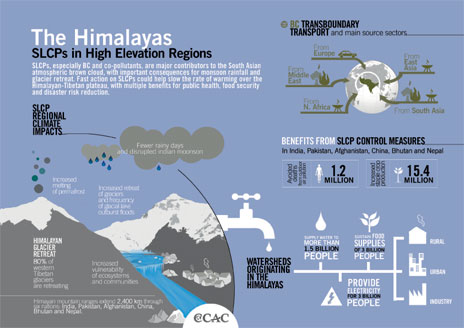
Black carbon is an important short-lived climate pollutant that exerts a dual impact by accelerating atmospheric warming and deteriorating air quality. Studying black carbon is hence crucial in the Indo-Gangetic Plains and Himalayan Foothills (IGP-HF) region. In this context, ICIMOD has played a pivotal role in establishing black carbon monitoring stations in the IGP-HF region of Nepal and Bhutan. Observation data show that black carbon concentrations peak during the pre-monsoon season, with a characteristic diurnal cycle marked by low night-time levels and higher concentrations in the afternoon at high-altitude locations such as Yala Glacier in the Central Himalayas. Glacier mass-balance analysis at this site indicates that black carbon contributed to approximately 39% of total mass loss during the pre-monsoon season. Source apportionment using the Absorption Ångström Exponent (AAE) suggests that biomass burning accounts for more than 50% of black carbon across most monitoring sites, except in the Kathmandu Valley, where fossil fuel combustion is the dominant source. The black carbon measurements were contextualized, across the HKH region. Having a short atmospheric lifetime effective black carbon mitigation offers a high-impact, near-term opportunity to simultaneously improve air quality, public health and safeguard Himalayan cryospheric systems.
© 2026 11th INDIAN INTERNATIONAL CONFERENCE ON AIR QUALITY MANAGEMENT
